Frog Skin: organ and chemical weapon
Story context (click to hide this block) (click to show this block)
This paragraph may contain plot information.
In the middle of the season, a character notes that they’ve been running into frogs of a respectable size and calls them unappetizing creatures on account of how slimy they are. The remark is played for laughs, but it rests on a real biological fact: amphibian skin mucus is quite real, quite palpable, and serves a specific purpose that the series only brushes past.
The subject in depth
Amphibian skin is thin, permeable, and has no scales or hair. This lack of a physical barrier is compensated for by two types of dermal glands [Wikipedia] .
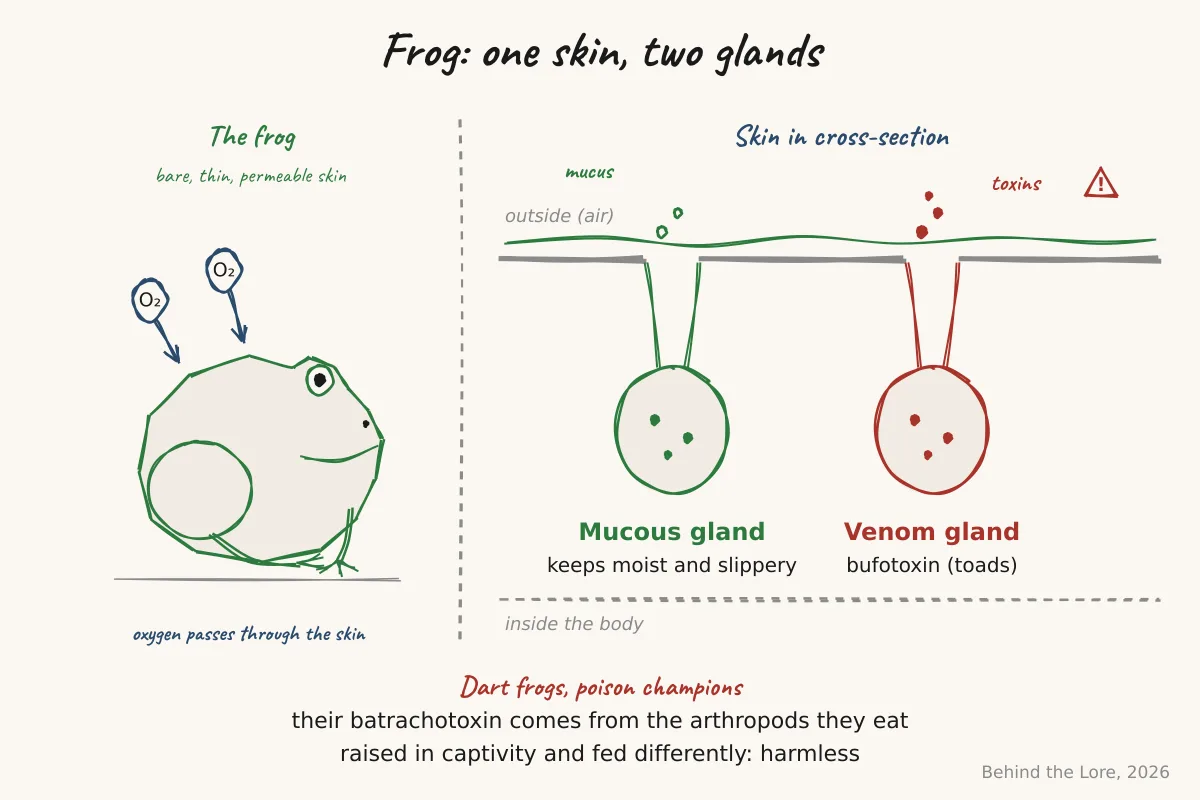
The mucous glands continuously produce a watery film. This mucus serves several roles: it keeps the skin moist, essential for cutaneous respiration (frogs absorb part of their oxygen directly through the skin), and it forms a slippery surface that makes a predator’s grip harder. Without this film, a frog dries out and suffocates within hours.
The venom glands form the second system. In toads (family Bufonidae), they form visible bulges behind the eyes, the parotid glands. They secrete a mix of molecules called bufotoxin, which includes bufadienolides, cardiotoxic steroids that act on the sodium-potassium pump of heart cells [Wikipedia] . A predator that bites a toad quickly feels the effects: hypersalivation, vomiting, heart rhythm disturbances. Humans can be affected through simple contact with mucous membranes.
The most extreme example is the poison dart frogs of tropical America. Their skin concentrates batrachotoxin, a molecule of exceptional potency that irreversibly blocks the sodium channels of nerve and heart cells. These frogs don’t synthesize the toxin themselves: they produce it from arthropods they consume in their natural habitat. Individuals raised in captivity and fed differently are harmless.
Going further
Sources
Published on
Keep investigating
Auto-suggested from shared concepts, disciplines, episodes, or characters.
Fugu and Tetrodotoxin
In The Apothecary Diaries, Maomao loves fugu and its poison. We explain tetrodotoxin, how it paralyzes, and why there's no antidote.
Aconite
In The Apothecary Diaries, aconite poisons even through honey. We explain aconitine, its action on nerves, and why it shows no mercy.
Orpiment and Arsenic
In The Apothecary Diaries, a yellow pigment poisons slowly. We explain orpiment, arsenic, and the chronic poisoning of court painters.
A Dog's Sense of Smell
Maomao deduces that the dog tracked gunpowder. We explain why dogs smell a hundred times better, how they follow a trail, and how it's used today.
Black Powder
In The Apothecary Diaries, Maomao states the exact formula for black powder. We explain the role of each ingredient, the reaction, and the rotten-egg smell.