Datura: Poison and the First Anesthetic
Story context (click to hide this block) (click to show this block)
This paragraph may contain plot information.
While investigating a suspicious death, Maomao takes an interest in a plant grown discreetly on a mound in the garden: datura. She lays out its double nature, toxic yet anesthetic depending on the dose, and reveals that a decoction from a distant land blends datura with fugu poison, capable of plunging someone into a state close to death before bringing them back. She also notes a key clue for the investigation: datura is easily mistaken for another plant in the garden, white morning glory.
The subject in depth
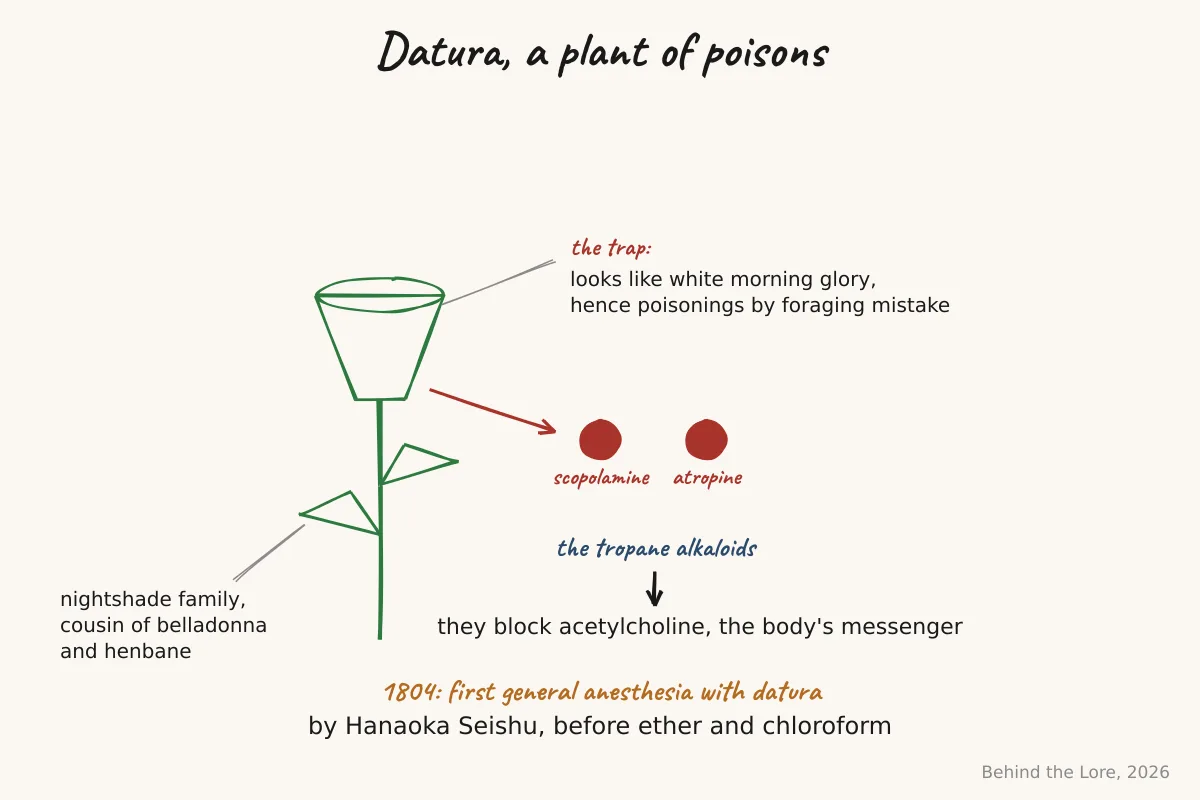
Datura, sometimes called thornapple or jimsonweed, is a plant in the nightshade family, related to belladonna and henbane [Wikipedia] . All these plants share the same family of active molecules, the tropane alkaloids, of which the two main ones are scopolamine and atropine. These are what make it both dangerous and medically useful.
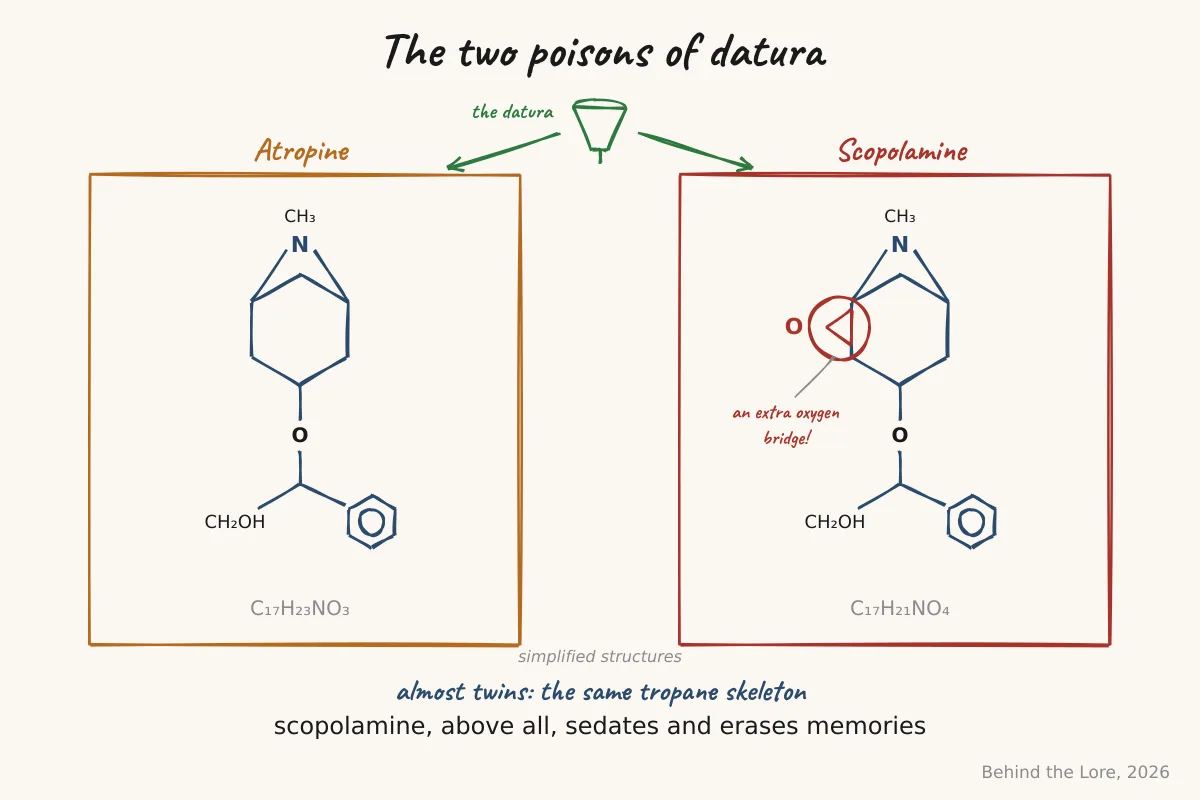
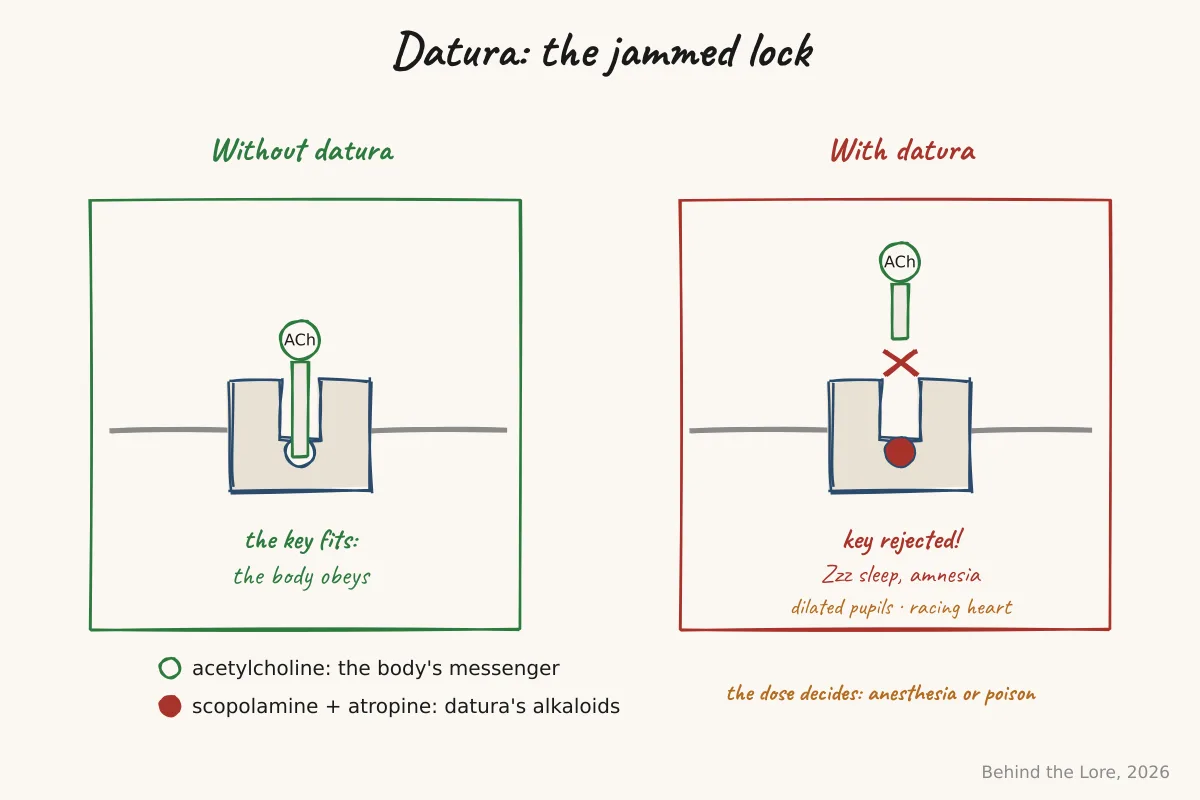
These alkaloids work by blocking acetylcholine receptors, a chemical messenger the nervous system uses to control many automatic functions [Wikipedia] . By preventing acetylcholine from acting, datura produces a characteristic cluster of effects: dry mouth, dilated pupils, a racing heart, urinary retention, rising body temperature, and above all a powerful central effect. Scopolamine, in particular, induces sleep, calms agitation, and causes amnesia: one acts and then remembers nothing.
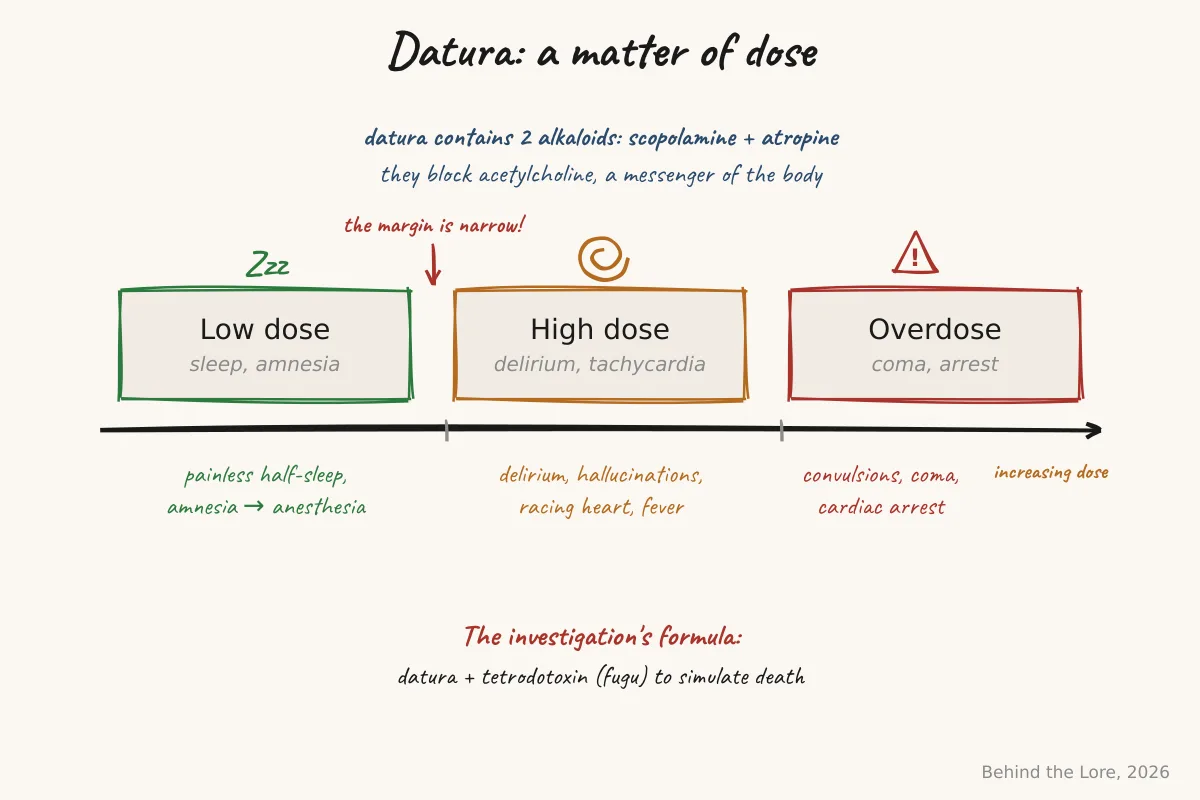
This property explains its use as an anesthetic. At a small, controlled dose, datura induces a painless half-sleep with no memory of it, ideal for enduring a procedure. But the same mechanism, pushed a step further, becomes a fearsome poison: delirium with hallucinations, dangerous hyperthermia, convulsions, coma, and cardiac arrest. The margin between the dose that heals and the dose that kills is narrow and depends on the plant, the climate, and the individual, which makes its use perilous. The investigation’s formula, datura combined with tetrodotoxin from fugu to simulate death, exploits precisely this narrow boundary between deep sleep and the apparent halt of vital functions.
The subject in depth, continued: a deceptive resemblance
The clue Maomao picks up on, the possible confusion between datura and white morning glory, is far from incidental. Many real-world datura poisonings are accidental, caused by mistaking the plant, its seeds, or its roots for an edible vegetable or ornamental plant. This botanical ambiguity is a classic device in poisoning cases, because it allows a crime to be passed off as a simple foraging mistake.
Going further
Sources
Published on
Keep investigating
Auto-suggested from shared concepts, disciplines, episodes, or characters.
Fugu and Tetrodotoxin
In The Apothecary Diaries, Maomao loves fugu and its poison. We explain tetrodotoxin, how it paralyzes, and why there's no antidote.
Lead White Makeup
In The Apothecary Diaries, white makeup kills courtesans. We explain why this ceruse-based cosmetic caused deadly lead poisoning.
Nicotine and Tobacco
In The Apothecary Diaries, macerated tobacco serves as a poison. We explain nicotine, its acute toxicity, and why diluting a poison can make it worse.
Aconite
In The Apothecary Diaries, aconite poisons even through honey. We explain aconitine, its action on nerves, and why it shows no mercy.
Rhododendron and Mad Honey
In The Apothecary Diaries, a tainted honey and a burned plant cause poisoning. We explain rhododendron's grayanotoxins and the famous mad honey.